043 – Working and praying… an (un)ordinary life

In our primary school (I’m talking about 55 years ago[1]), we children collected bottle caps (an aluminum-like, thin lid on milk bottles and such), mirrors and beads for the mission. The caps had value for reuse, the mirrors and beads were shipped to the mission field to be given away as gifts. And soon the image emerged of a man in a khaki suit and a pith helmet on his head, who all day long, year after year, handed out the bead necklaces and mirrors to the barely dressed dark people from a large chest, a kind of treasure chest.

What we, certainly as children, did not think about was that the missionary, and also his wife and any children, also had to live, cook, sleep, dust and eat somewhere.

What came through in a missionary magazine of that time, or at the mission evenings when a missionary on leave gave a speech, was not that he had repaired his roof, or that his wife had done the laundry. These reports were much more about traveling to unknown tribes in the interior, where the aforementioned mirrors and bead necklaces had to prevent the headhunters from being unfriendly to them. 

Working in Aruba, to care for the less fortunate and to introduce them to the gospel, is completely different. There are no native tribes with spears and other scary things. There are no dangerous routes to almost inaccessible places. And mirrors? Aruba has plenty of those. However, much worse than those dangerous routes and the spears is the poverty, the prostitution, the addiction, mainly in the southern part of the island.

Aruba: ‘One happy island’ is the promotional slogan.

But ‘one’ it is not. And happy? Well, at least not in the poorer South. And if we take a look at the emptiness of the entertainment of the millions of tourists in the – dare I say it? – decadent North, where often times two or three cruise ships dock every day and the thousands of passengers stroll along the luxury shops in Oranjestad, then there is probably no real happiness in the North either. There are dozens of beautiful hotels there and very luxurious resorts, and the number of beautiful homes of the rich of the world is countless. But two or three streets behind that there is also a lot of misery.

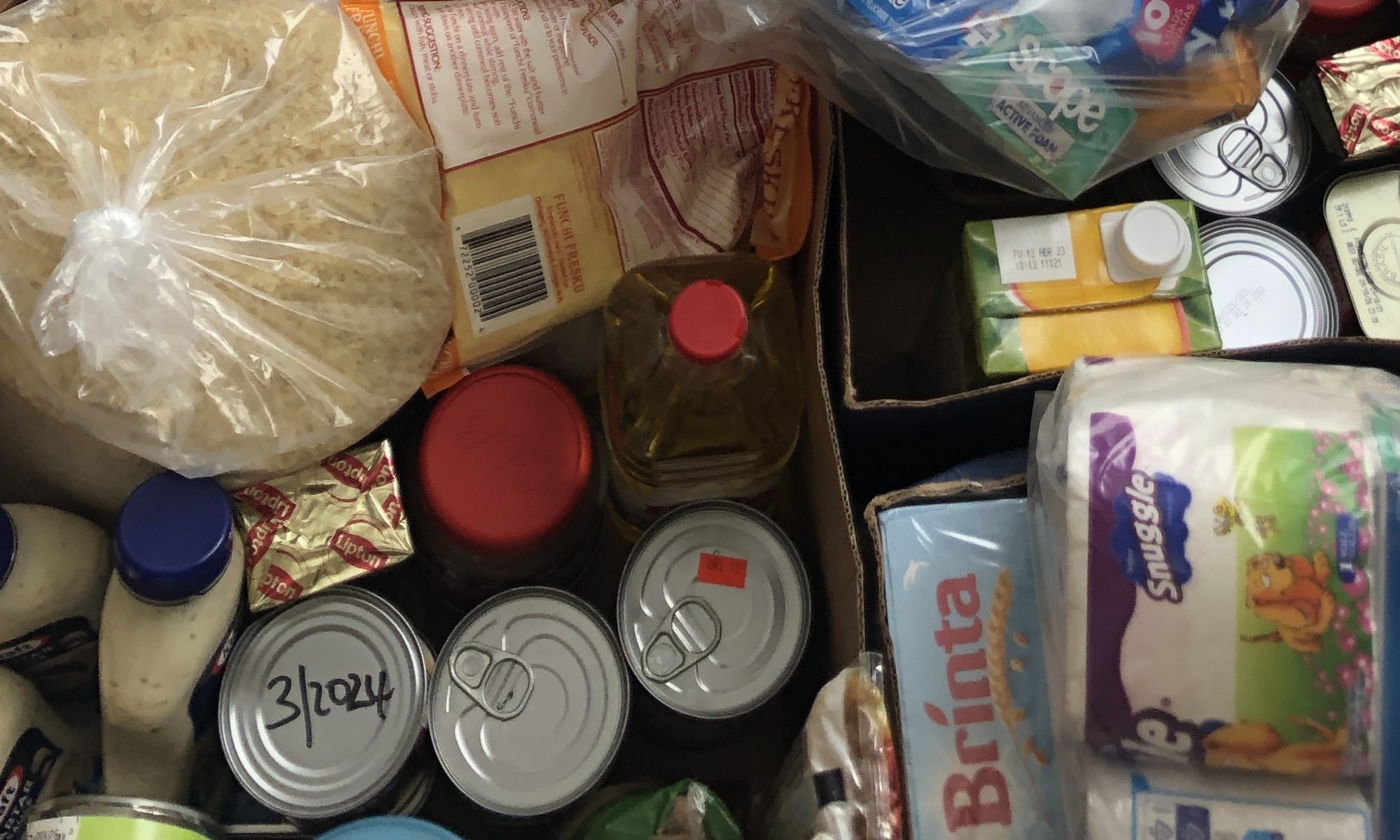
On Saturdays, Erik went in a van to San Nicolas and the surrounding area for over a year. To bring food to an addicted man who barely gets out of bed. Or to an old grandmother who takes care of four children in her small house, because her daughter has to work very hard in the luxury hotels in the North. (Very hard, because once a month a day off is more or less the standard.) Or to bring something to eat to almost twenty addresses where people live in miserable conditions. At each address, Erik asks if he can pray with the people. And almost everyone agrees. The affirmative ‘Amens’ are then pleasant and warm events.

And that brings me to what I am very grateful for. The miserable circumstances that Erik and Hanneke experience would almost make that snow under, although there is no snow on Aruba (with an average of at least 28 degrees Celsius).

I am grateful because they do their work in prayer, and are attentive to where their heavenly Father sends them. Whether that is bringing food, organizing marriage courses, Bible studies or counseling sessions, or the many meetings with different churches to expand and coordinate the work. Their prayer and with that their apparent dependence on God is a central part of their lives, in addition to intensive Bible studies and quiet times.

Experiencing their life, work, and prayer on Aruba for a month also multiplies our own prayer, both for Erik and Hanneke and for their sons Ryan and Kai. And that is why I want to end this guest blog with 2 things:
1. I want to call on everyone who reads this to think about sponsoring Erik and Hanneke and 2. I sincerely wish these beautiful children of God much strength, wisdom and insight to shape this important work in Aruba. And blessing, of course!

[1] This guest blog was written by the father of Hanneke, Heerco Walinga – Thank you so much!

042 – His arms

Sometimes reality seems different than it is. For over a year now, I have been visiting families in San Nicolas every Saturday to bring food. We call it a food distribution program, but it is not really about the food at all. In fact, everything we do is about building relationships and seeing people. Connecting with people and being able to better focus on what they really need. It is not an easy job. Every Saturday, I am warmly welcomed by different people, but every Saturday I also see very distressing situations. And sometimes, sometimes it grabs me by the throat. It grabs me by the throat when I enter the house of the elderly man who is lying in bed, “out” from drugs again and when I, like every time, find a huge, dirty, smelly mess in his house. It grabs me when I enter the house of the 81-year-old grandmother who can no longer take care of herself, she bossily orders the few volunteers around, who come by to wash her every day, because she feels that she is losing control even more because of their consistent expressions of love. It sometimes affects me when I think that I can only do this work for a few people due to a lack of capacity. My arms are too short to do what is necessary. Sometimes I don’t know what I will encounter. Every dire situation is one too many, but they still keep popping up again and again.

And all of a sudden, there is the radiant smile of that single woman who is so proud that she painted her own house. Suddenly, I receive a photo of a tidy and scrubbed room where that family can now celebrate Christmas. Suddenly, someone shows up who comes by day in, day out to provide clean clothes and food for that grandma, someone who, despite being ordered around continues to give practical love. Suddenly, there is Jesus himself, who extends his arms despite our shortcomings, continues to serve and has already won the victory. It gives me courage to keep going, even if it sometimes seems too much.

Photo by pixls.am on Unsplash.

041 – It didn’t just change him

From the start of our food distribution ministry, we had been visiting them. Two sisters, both bedridden, cared for by the husband of one of them. Although their physical condition was anything but stable, both sisters were talkative every time we came. For them, our arrival meant a moment in which the routine of everyday life was broken, for us it meant we had the opportunity to encourage them and pray with them. What a privilege, and how it affected me at the same time that we could do so little for these people.

The next-door neighbor didn’t like the fact that I visited them, but not her. She also wanted to receive food from us every Saturday and thought the need in her situation was just as bad. It was difficult to explain to her why we made these choices. Unfortunately, week after week, no kind word could be said to us.

A few weeks ago I parked the van in the street again. Before I even got out, the same neighbor came towards us with a lot of commotion. One of the sisters had died the day before and the house was in mourning. When we entered we found the husband in the bedroom, sitting there on a chair, silent and shaken. He told us that his wife had ended up in the hospital. After being able to visit her on Tuesday, He had not seen her since. She had died on Friday. Because his wife was always silent when they were in an argument, he wondered desperately what he had done wrong. He didn’t even have had the chance to say goodbye. Well, what do you say in such a situation? We just stayed with him for a while, told him that God has the answers, that He knows what He is doing, that He will make everything right. Before we left we prayed together; for him, for his sister-in-law, for the whole family.

The following week condolences and a cremation followed. In the meantime I visited them a few times and last week I came back again to bring food. This time two portions instead of three. When I walked in and greeted him, he looked at me with a beaming smile. “I want to go to church again,” he said, “we’re going to plan it. I’ve had time to think about everything that has happened and I’m good to go. I have your WhatsApp number. I’ll let you know when I can go and we will sort it out.” Completely surprised, I said: “Fine, just let me know, you are very welcome to come along.” It continues to surprise me how God answers prayers every time. After praying for him, I got back in the van happy. As I drove down the street, this time I received a friendly wave from the neighbor. Of course I waved back. Apparently it’s not just him who has changed!

040 – Toiletry bag

People can make such a deep impression on you. During our visit to Aruba I[1] had the opportunity to visit Bethel Foundation. A simple complex, set up and run by Irene, a woman of about my age. She herself had been addicted for years in the Netherlands, but God had saved her in a miraculous way. Her liberation led to an unconditional love for people on the hopeless side of life; addicts in the poorest part of Aruba; San Nicolas.

Irene offers them shelter, food and addiction recovery. Everyone understands that this is difficult. But no matter how strict she is, her love is there every day. She starts the day at 3 am to seek God and ask for strength, and then she is ready for all her residents from very early on. She tries to make a home for them with the little they have.

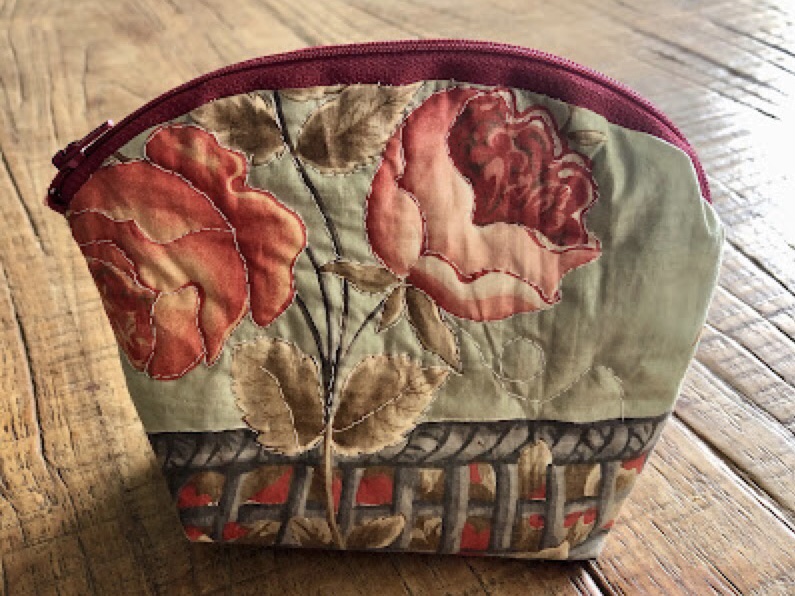
If there is someone who is not addicted, but cannot get help anywhere (for example someone with a serious illness), she also offers help and a home. She told me she was praying for extra hands; After years, the work becomes too heavy for her to be able to do it seven days a week. If I would like to pray with her for this. I did. But because I was still in Aruba for a week, I couldn’t resist making a toiletry bag by hand to give her something for herself. 

Something personal from woman to woman. This toiletry bag was accepted with emotion. She said she could wear it between her clothes so she could put her daily allowance in it. Because even though her residents are grateful to her, stealing just happens. 

I still pray for her because she is so brave. She takes risks and points all the people who come under her roof to God who gives grace and asks for faithful listening. May God bless her and her people.

[1] This guest blog is written by Erik’s mother, Elizabeth de Kievit. Thank you so much!

039 – Cashew nuts

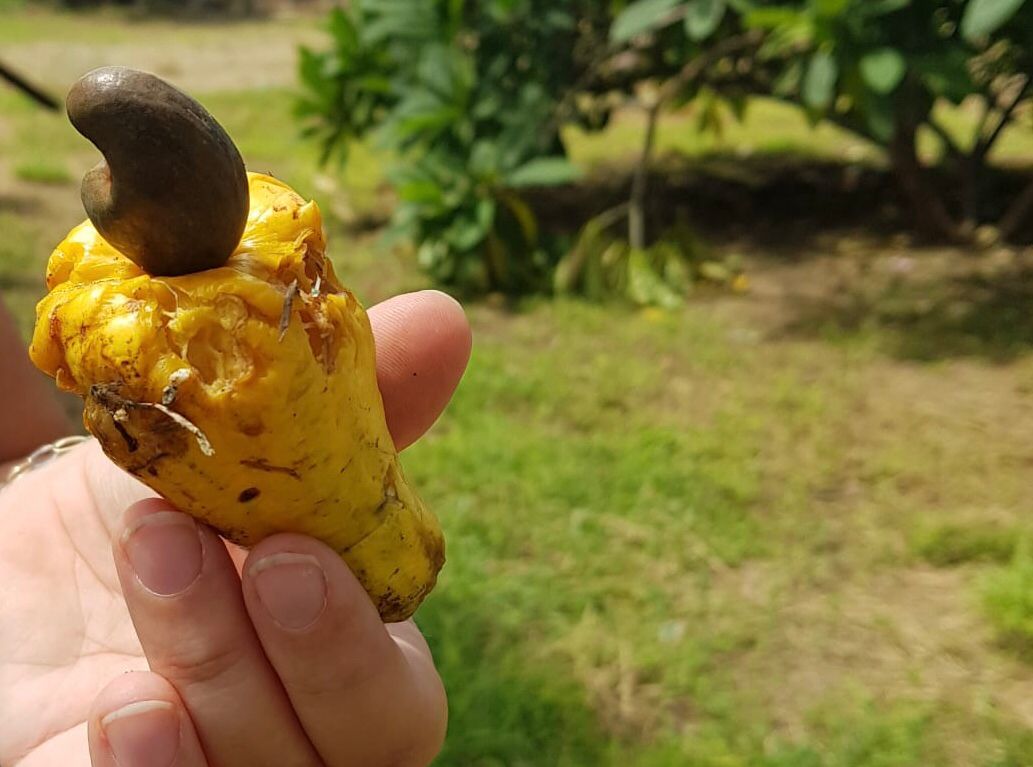
“Here you see the Frangipane, that is a mango tree next door, and this tree… is the cashew nut tree.” I look at her in surprise. “Do cashews grow in a tree?” My sister-in-law laughs. “Yes,” she says, “and even with just one nut per fruit.” She searches the ground for a moment and then picks up a freshly fallen fruit that looks a bit like a small green and yellow pepper, but sure enough… on top of the fruit there is a crescent-shaped nutshell through which I can recognize the cashew nut. Unbelievable… now I understand why those nuts are always so expensive. How many fruits would they need to fill one bag? 

My sister and I[1] flew across the world the previous day and are now guests of my brother, sister-in-law and cousin in Aruba. It is over 86 degrees Fahrenheit outside and we are shown around the garden where all kinds of things grow and for which there are all kinds of plans. We see all kinds of things that we are not familiar with at home. We often know something about it, but I, for example, had never even seen those large cacti that grow everywhere here. It seems like a different world. 

That Aruba is a different world also becomes more apparent later in the week. We get a tour of the island and see the big difference between the wealth of the small strip of tourism area and the poverty of many other neighborhoods. It makes me feel torn. As a rich Western woman, I am used to luxury. Although not the luxury of the cruise ships, but it is the luxury of walking into a supermarket without any worries to do some shopping or eat out. And then I meet people who have lived on the island for generations, in poverty, and who depend on others for their meals. Who work multiple jobs to care for loved ones, who have few choices and are certainly not carefree. 

It feels crooked… that Aruban people benefit little from tourism while the island would probably be even poorer without tourism. However, tourism is mainly profitable for the rich, and only the nice pictures are distributed. 

In the Netherlands we complain easily about how expensive a bag of cashew nuts is, but in reality we do not realize that so much fruit is needed for one bag of cashew nuts and how much work it is to fill that bag. Wouldn’t that be the same with tourism? Do we actually realize what our luxurious life really costs?

[1] Guest blog by Christine Bondt – Thank you Christine!

038 – Brownies

After half a year of getting to know each other, Gabriela[1], a mother of seven, agreed for us to come over and paint a wall in her living room. How happy we were. The house had only two bedrooms and a living room / kitchen. When the children weren’t at home, there was no chance to even start, too much noise and stress. But now, Gabriela agreed upon choosing a suitable moment for the walls to be painted. We eventually settled on painting the week before her birthday. Then everything would be neat when it was her birthday, and she could enjoy the party with a festive feeling. For us, her consent felt like breakthrough. We wanted to help, and we were very happy she trusted us enough to let us help her.

She canceled at the last minute. She had some really bad experiences, and she didn’t want to paint anymore. Everything was pointless in her eyes.

The following Saturday we brought food. Although she still had an angry look, she seemed to have calmed down a bit. “What was that all about?” I asked, “Why did you drop out?” She said that Social Services suddenly deducted a large amount from her benefit. A few months ago, she had debts to the water and electricity company, but while those debts had been fully paid off, Social Services felt that, for the next year, they should make the payments directly from her benefits. Of course, there would be a margin, so that there would no longer be a shortage. She became furious again; “I barely make ends meet and do everything I can to pay the bills. Now Social Services uses that margin to make it even more difficult for me to pay the bills.” I understood her completely. The thoughts of some authorities in Aruba are inscrutable. But going against it wouldn’t help.

I was afraid that her confidence towards us had also been dented by this incident. Whatever we said, painting the wall was no longer an option for now. I understood, but I was also disappointed. I once again explained to her that we did not like the intervention of Social Services either and that we did not do our work based on rules, but out of love. But of course, that didn’t help. She couldn’t buy a cake for her birthday and enjoy it with the children. So, everything else felt a bit pointless as well.

Sunday was her birthday. I kept thinking about her and told my wife that I actually wanted to bring her a cake or something. My wife told me she had a pack of brownie mix. An hour later, I brought them to her, I had made them myself. How surprised and happy she was. Even though things went wrong, she still had cake on her birthday. Despite everything, she enjoyed a little bit of a good start of her new year!

[1] Fictitious name
Photo by iMattSmart on Unsplash

037 – Unexpected fruits

Sometimes you have networking appointments that you know are good to go to, but you just don’t feel like going. This week I had such an appointment. I didn’t feel like it at all and dreaded the more than two hours of conversation. But I also knew it was good to go. I couldn’t pinpoint exactly why, but I just knew. And so I gathered up my courage and went. 

The appointment went well. We sat and made small talk for a while, but secretly I still sighed, “Lord, why?” There were plenty of other tasks waiting for me and I wanted to move on, not sit still on a bench for two hours, sipping otherwise delicious coffee.

I felt the pressure of tasks of administration, finances and giving an update to the supporters waiting for me. I had been putting them off for some time because I was busy with the Bible Summer School, Counseling and all kinds of other ministry activities. Running behind myself with everything that had to be done, I had not had time for quiet time for a number of days. I felt guilty about it, wanted to really sit down and think about it, but subconsciously kept in mind what still had to be done.

Back on that bench, my coffee cup was empty. The waiter, a nice young guy of 19, passed by. My companion ordered a new cup of coffee for us and asked him if we could pray for him. “Yes, please!” was his enthusiastic response. “Let me help these customers and I will come back.”

As we waited for his return, I realized that in all my business I had become focused on what I had to do in the “normal” world. As a result, I was mainly focused on myself and thought less about what God wanted to do for the people around me. 

Our waiter returned. He said that he was raised Catholic, but had not been going to church for years. He had been reading the Bible for a while and realized that he wanted to belong to God. I asked him if he had ever consciously asked God if he could belong to Him. The answer was ‘no, not consciously.’ He indicated that he realized that Jesus was his Savior and would really like to have a relationship with Jesus. After some explanation, we prayed together and he gave his life to the Lord on the spot. How special is that! While I didn’t feel like it and was distracted by my own business, our Father brought this young man into His kingdom anyway. What a blessing that, despite my behavior, He continued with the real work. And what a mercy that while He saved this guy He also tapped me on the shoulder. As if He wanted to say: ‘even when you are not focussed, I know what I am doing.’

Photo by jose alfonso sierra on Unsplash

036 – A complete mystery

When we lived in Florida, we were sometimes surprised at how quickly American Christians could tie the knot. American culture really differs from Dutch culture in this respect, and also dating time looks really different in America than in the Netherlands. The courtship period in the Netherlands can easily last a few years and in many cases varies from pleasantly casual to intentional. But if you choose to date in Christian America, in many cases it is very intentional. Perhaps that is also the reason that dating sometimes only lasts six months before getting engaged and married, even for young people. And yet I see a deep heart connection in many of these American couples that apparently can also arise in a short time.

Even in normal relationships it is sometimes a mystery to me how this happens. That direct heart connection that can sometimes exist with someone I meet. You see each other for the first time and you immediately know: this is good. We encountered friends in different countries in this way, but now also in Aruba. Friends isn’t even the right word. Actually, I have no words for such a relationship. It feels deep and loving, as if you have known each other for years, even though that is not the case at all. When you think about it, it’s quite bizarre that this is possible. 

However, I did notice something. Every time this happens to us, God is working on a beautiful part of His plan; we have to provide a training, or something must be organized at very short notice. We have no idea how to shape this in the short term. But God arranges it perfectly every time and brings the right people with the same heart attitude into our path. Sometimes it is only for a short time, but often for longer. I think it’s beautiful and I enjoy it very much, but I don’t understand it at all. Incomparable how He does that, that God of ours. A complete mystery.

035 – Wedding

Not too long ago we were invited to a wedding in Aruba for the first time. The bridal couple had followed the Marriage Course that we organized. After the course ended, we received the invitation and I must honestly say that I was not expecting that, but I felt very honored. 

I had attended a wedding in Uganda before, but it remains special to be a wedding guest in another country. All kinds of questions came up in advance. What clothes do I wear and are there any expectations about that? Are there customs that I should take into account? What is normal to give as a present? 

Wedding parties especially are the parties where culture is expressed. Is there dancing or not? Are you also expected to stay for dinner or not? In one culture you are either a day guest, an evening guest, or you are only expected to go to the reception. In another culture you go to a wedding or you are in the wedding. In a third culture, everything is for everyone and it is inappropriate not to participate in everything, including the evening dance. In some countries you can only marry before the law, in some countries you marry in the church, sometimes it doesn’t matter and sometimes you cannot get married if you cannot demonstrate that you have a certain nationality. There are all kinds of variants thinkable in this regard.

When I think of all those variants, I immediately wonder what the big wedding will look like. Will it be full of ceremony? Or is the emphasis on meeting everyone we haven’t seen for so long? Will there only be focus on the meal, or also on the dance? I’m very curious. We know that we are allowed to wear white clothes, but I am also curious about the taste of the wine we drink. I hope it will happen soon.

In any case, the Aruban variant was beautiful; the couple was already legally married when the blessing took place in church, including putting the rings on their hands. This was followed by a very pleasant reception with lots of cheerful people, lots of photos and lots of tasty snacks. A wonderful abundant feast. I am looking forward to experiencing more of that!

Photo by Al Elmes on Unsplash

034 – God’s Fatherheart

How do you tell twelve-year-old children without a father in their lives that God is their loving Father? How do you make it clear to a boy that God’s Father’s heart is full of love, when his father denies that he is his son? Heartbreaking!

Last week I had the opportunity to teach about the Fatherheart of God in the Bible Summer School. It was the first time I taught on this subject and the target group was not too easy. But I was looking forward to it. I had received confirmation after confirmation that I could finally speak on this subject. Something I had been looking forward to for more than two years. Now the time had come!

As I stood at the front of the room, one disturbing comment after another came out of his mouth. Heavily damaged in his not so long past, parents who were separated and a father who denied him as his son. With every comment I heard his deep pain through the words of his apparent indifference. “How can this ever be straightened out,” I thought. 

Fortunately, although not very consciously, I had taken this into account when preparing my lessons. By paying attention to how earthly fathers function with mistakes and flaws and by showing in the Bible that God is really different, I hope that I have been able to plant a small seed. Fortunately, I also know that there is a spiritual father in his life who sets a good example, responds lovingly and sets clear boundaries. At the same time, I just pray that his real father will repent. But above all, I pray that God will touch his heart in such a way that this boy will inevitably grow up into a man after God’s own heart. God’s Fatherheart.

Photo by M.Hanif Project on Unsplash